Exercise physiology for autism
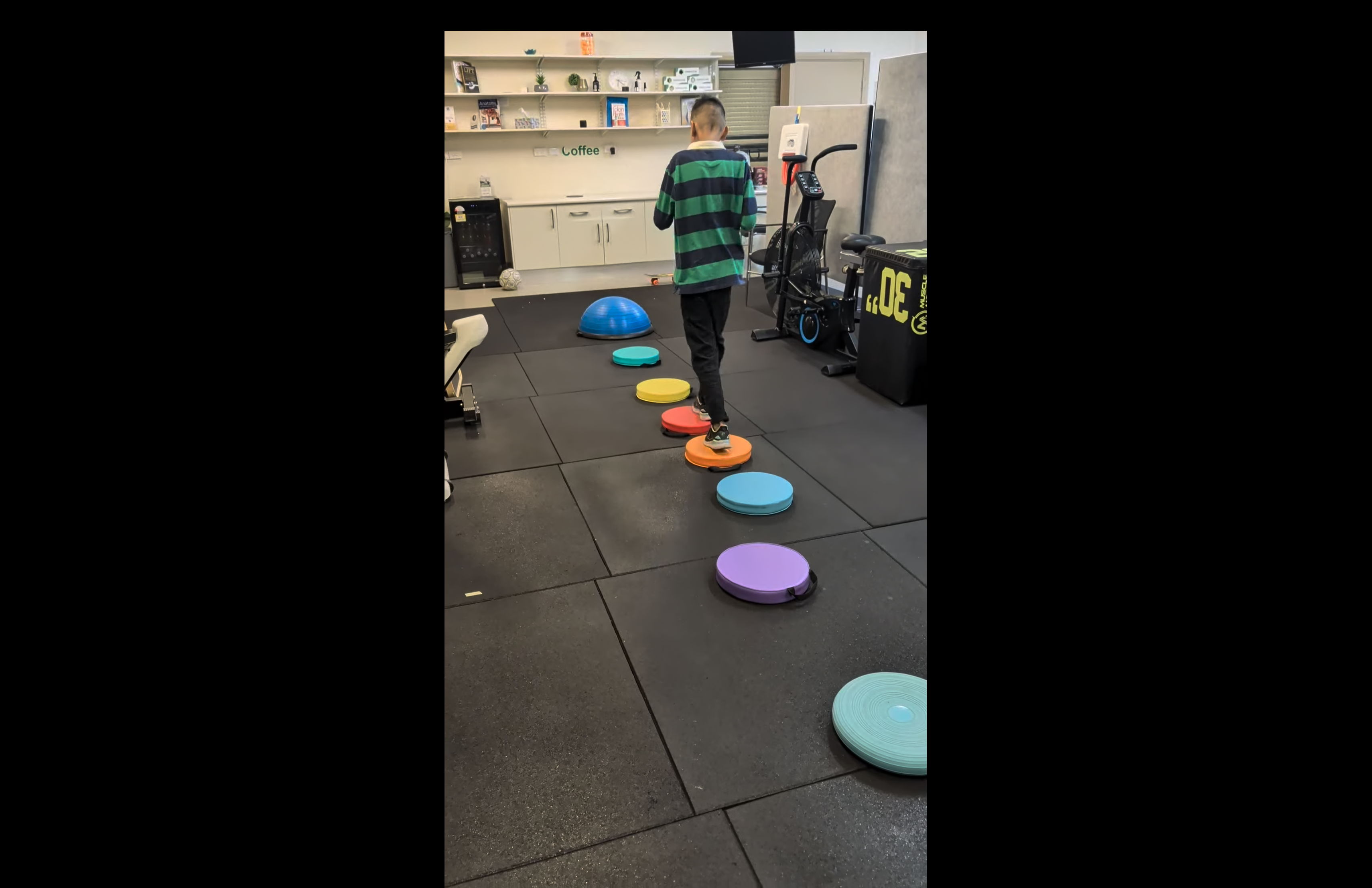
Our sessions run as play. We help autistic children and teens build coordination, strength and confidence through games built around what they love.
What is autism?
Autism is a lifelong neurodevelopmental difference that affects how a person communicates, interacts, processes sensory information and experiences the world. Every autistic person is different, with their own strengths, interests and challenges.
How can autism affect movement?
Many autistic children experience some of the following:
- Low muscle tone or tiring quickly
- Trouble with coordination, like catching, jumping or riding a bike
- Difficulty planning and sequencing movements
- Balance challenges
- Sensory sensitivities that make sport or noisy places hard
- Less time being active than other kids their age
How does exercise help autistic children?
Exercise helps autistic children build the coordination, strength and fitness that make everyday movement easier. Regular movement can also help with focus, mood and regulation, and gives kids the confidence to join in at the playground, in PE and in sport.
Exercise prescription for autistic children
The recommended amount of activity for children and teens is 60 minutes a day, including activities that build strength on at least three days a week. For autistic children, the focus is making movement fun, structured and achievable.
60 minutes
of activity every day
3 days
of strength-building play a week
That target is the same one recommended for every child. What changes is how we get there. Kids move more when they enjoy it and know what to expect.
Our focus
Sessions run as play. We use games, obstacle courses and challenges built around your child's interests, with clear routines, visual cues and timers so they know what's coming. We work on the skills your child needs, from catching and jumping to riding a bike, and line up with goals set by their behaviour support practitioner and OT.
When should an exercise session be paused?
We pause or change a session when your child is overwhelmed, unwell or needs a break to regulate.
- Signs of overwhelm or distress, like covering ears, shutting down or a meltdown
- Too much noise, light or activity in the environment
- Your child is unwell or has a fever
- Pain or an injury
Why see an exercise physiologist for autism?
An exercise physiologist builds a movement program around your child, not the other way around. We make it fun enough that they want to come back, and work toward the goals in their NDIS plan.
- 01
Get to know
We meet your child, learn their interests, sensory needs and goals, and assess their movement skills through play.
- 02
Set and coach
We pitch games at the right level so your child succeeds and stays motivated.
- 03
Progress
We build new skills over time and report on progress for plan reviews.
It is not always about doing more. It is about knowing when to push and when to pull back.
Ready to get started?
Autism exercise programs in Western Sydney
Our autism programs run at home, in our clinic at 92 Darcy Road, Wentworthville, and at school or in the community across the Parramatta and Blacktown areas.
At home
Where many kids feel most comfortable and ready to play.
In the clinic
Space and equipment for obstacle courses, balance and strength games.
At school or in the community
We can work on the playground, at the park or wherever your child needs the skills.
You start with a first session where we get to know your child. We re-assess as you go and provide reports for NDIS plan reviews.
Is exercise physiology for autism covered by the NDIS?
Yes. Exercise physiology can be funded through the capacity building supports in an NDIS plan, usually under Improved Daily Living.
Self, plan or agency managed
As a registered NDIS provider, we can work with all three.
Reports for plan reviews
We provide progress reports to support your child's next plan review.
Autism and exercise physiology: common questions
Book an exercise physiologist for your child
Not sure if this is right for your child? Tell us what's going on and we'll tell you honestly whether we can help.