Exercise physiology for falls prevention and balance
Falls are not a normal part of getting older. The right balance and strength training is one of the few things proven to reduce falls, and we make sure it is safe and challenging enough to work.
What causes falls in older adults?
Falls in older adults usually come from a mix of things rather than one cause. Weaker legs, slower balance reactions, some medications, changes in eyesight and hazards around the home all add up. About one in three people over 65 has a fall each year, and many of the causes can be improved.
What are the signs you're at risk of falling?
Common signs you're at risk of falling are:
- You've had a fall or a near miss in the past year
- You feel unsteady on your feet or hold onto furniture to get around
- You need your arms to get up from a chair
- Your walking has become slower or more of a shuffle
- You've stopped doing things because you're worried about falling
How does exercise help prevent falls?
Exercise helps prevent falls by improving your balance, leg strength and how quickly you react when you trip. Balance and strength training is one of the few things proven to reduce falls in older adults.
Exercise prescription for falls prevention
The recommended exercise prescription for falls prevention is 150 minutes of moderate activity a week, with balance and strength training on at least three days a week.
150 minutes
of moderate activity a week
3 or more days
of balance and strength training a week
That weekly target builds on the one recommended for every adult. For falls prevention, the focus is balance training that genuinely challenges you, alongside leg strength.
Our focus
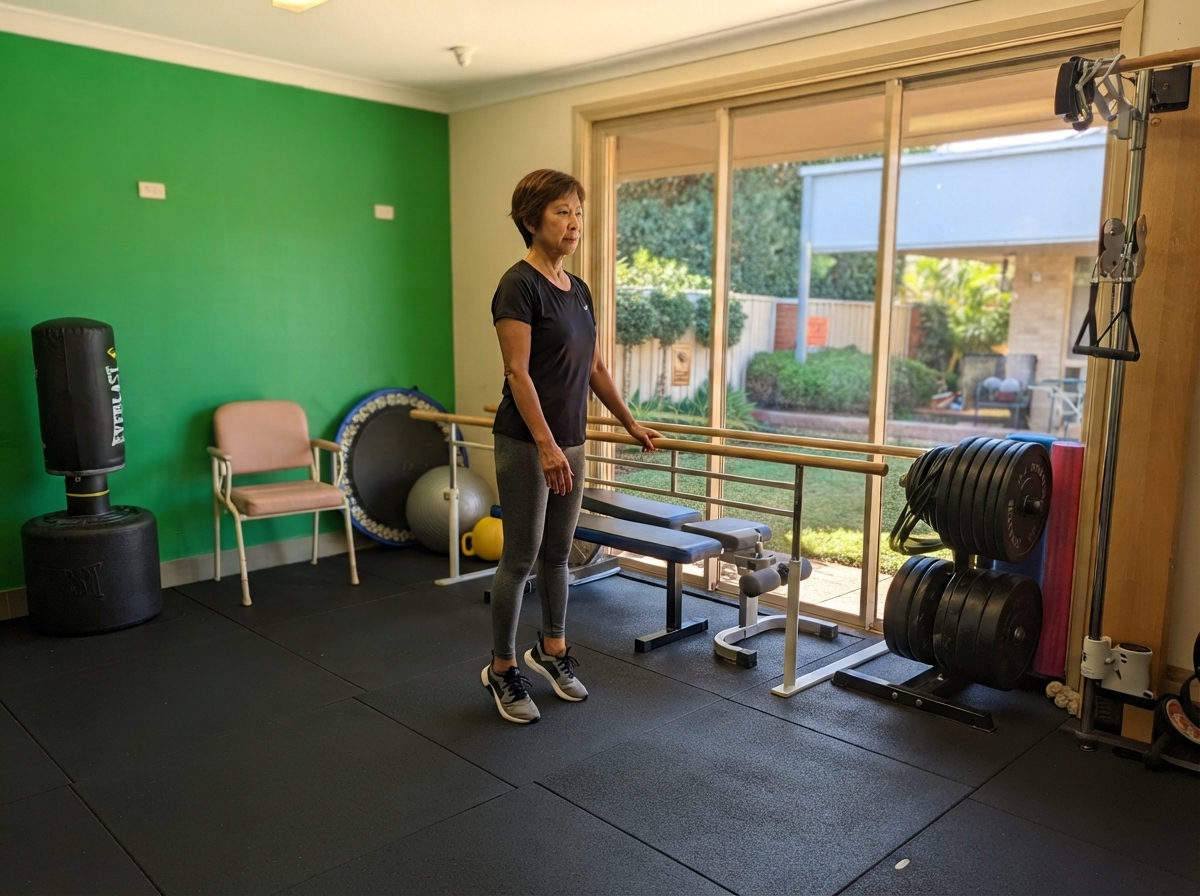
Balance exercises only work if they're hard enough to make you wobble. We progress them step by step, by narrowing your stance, adding reaching and stepping, and reducing hand support, always with something to hold nearby. We also build leg strength and practise everyday movements like getting up from a chair and, if you need it, getting up off the floor.
When should you not exercise if you're at risk of falls?
You should hold off exercise if you feel dizzy or light-headed, after a recent fall that hasn't been checked, or when you are unwell.
- You feel dizzy or light-headed, especially when standing up
- You've had a recent fall, hit your head, or have new pain
- You have chest pain or unusual shortness of breath
- You are unwell, or feel more confused than usual
If anything changes during a session, we stop, check you over, and only continue when it's safe.
Why see an exercise physiologist for falls prevention?
An exercise physiologist makes balance training challenging enough to work while keeping you safe. Exercises that are too easy don't reduce falls. Exercises that are too hard, done alone, can cause one.
- 01
Assess
We test your balance, leg strength and walking, and talk through any falls and what worries you.
- 02
Set and coach
We choose exercises at the right level and stay beside you while you do them.
- 03
Progress
We make them harder as you get steadier, and re-test so you can see the change.
It is not always about doing more. It is about knowing when to push and when to pull back.
Ready to get started?
Falls prevention programs in Wentworthville
Our falls prevention programs run from our clinic at 92 Darcy Road, Wentworthville, and in homes across the Parramatta and Blacktown areas.
In the clinic
One-on-one sessions at 92 Darcy Road, Wentworthville.
At home
We practise in your own home, on your own steps and around your own furniture.
KeepFit group classes
Balance and strength exercise alongside others, supervised by an exercise physiologist.
You start with a one-on-one assessment. We re-test your balance and strength as you go, and can send progress reports to your GP or aged care provider.
Is falls prevention exercise covered by Medicare or aged care funding?
Often, yes. Support at Home, DVA and private health can all cover falls prevention. If you also have a chronic condition, a GP Chronic Condition Management Plan gives you a Medicare rebate on up to five allied health visits a year.
Support at Home
Staying steady and independent at home is exactly what aged care funding is for. We work with your provider.
DVA and private health
DVA cardholders may be covered, and most private health funds pay a rebate.
Falls prevention and balance: common questions
Book an exercise physiologist in Wentworthville
Not sure if this is right for you? Tell us what's going on and we'll tell you honestly whether we can help.