Exercise physiology for Parkinson's disease
Exercise is one of the most important things you can do for Parkinson's. We help you move bigger, stay steadier on your feet and keep doing the things you enjoy.
What is Parkinson's disease?
Parkinson's disease is a progressive neurological condition where the brain gradually loses cells that make dopamine, a chemical that helps control movement. It affects how you move, and can also affect sleep, mood, energy and memory. It is most often diagnosed later in life, though younger people can have it too.
What are the symptoms of Parkinson's disease?
The most common symptoms of Parkinson's disease are:
- A tremor, often at rest and starting on one side
- Stiff muscles
- Slower movement
- Smaller, shuffling steps
- Balance problems and falls
- Freezing, where your feet feel stuck to the floor
- A softer voice and smaller handwriting
- Tiredness
How does exercise help Parkinson's disease?
Exercise helps Parkinson's disease by improving walking, balance, strength and fitness, which lowers your risk of falls and helps you stay independent. It also helps with mood, sleep and energy. There is growing evidence that regular, more vigorous exercise may help slow how quickly symptoms progress.
Exercise prescription for Parkinson's disease
The recommended exercise prescription for Parkinson's disease is 150 minutes of moderate to vigorous aerobic exercise a week, plus strength training and balance training on two to three days a week.
150 minutes
of moderate to vigorous aerobic exercise a week
2 to 3 days
of strength and balance training a week
That weekly target builds on the one recommended for every adult. With Parkinson's, the focus is big, effortful movement. Parkinson's makes movements smaller and slower without you noticing, so we train the opposite.
Our focus
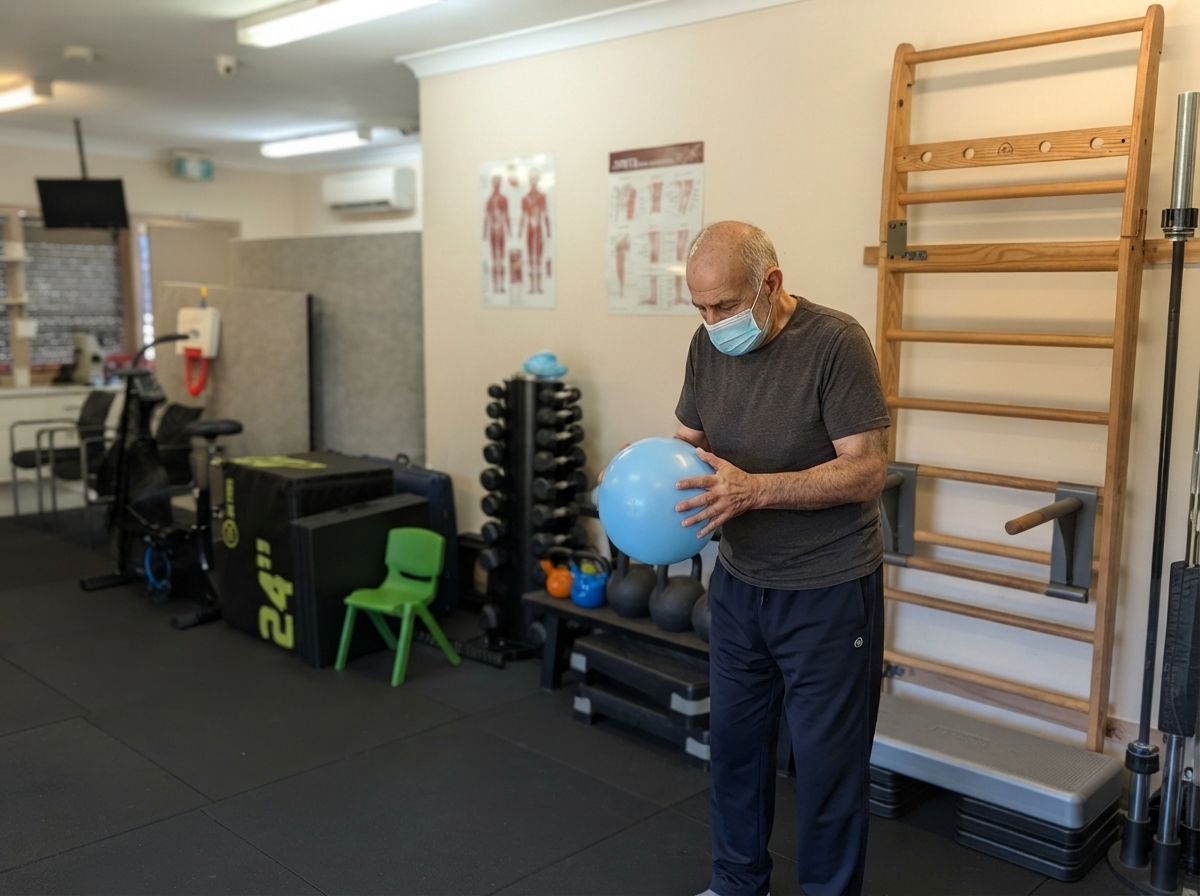
We use big, deliberate movements and work up to a challenging intensity. We practise balance, turning, stepping and doing two things at once, like walking while talking. We plan sessions for when your medication is working best, and teach strategies to help with freezing.
When should you not exercise with Parkinson's disease?
You should hold off or ease back on exercise with Parkinson's if you feel dizzy when standing, your symptoms suddenly get worse, or you are unwell.
- You feel dizzy or light-headed, especially when standing up
- Your symptoms suddenly get worse or something new appears
- You've had a recent fall, hit your head, or have new pain
- You are unwell, or have chest pain or unusual shortness of breath
On harder days, we change the session rather than cancel it.
Why see an exercise physiologist for Parkinson's disease?
An exercise physiologist makes exercise intense enough to help Parkinson's while keeping you safe from falls. Parkinson's changes from day to day and year to year, and your program needs to change with it.
- 01
Assess
We test your walking, balance, strength and freezing, and look at your falls history and medication timing.
- 02
Set and coach
We set a safe but challenging level and coach big, confident movement.
- 03
Progress
We adjust as your symptoms change and re-test so you can see where you stand.
It is not always about doing more. It is about knowing when to push and when to pull back.
Ready to get started?
Parkinson's exercise programs in Wentworthville
Our Parkinson's programs run from our clinic at 92 Darcy Road, Wentworthville, and in homes across the Parramatta and Blacktown areas.
In the clinic
One-on-one sessions at 92 Darcy Road, Wentworthville.
At home
We practise in your own home, including the doorways and tight spaces where freezing often happens.
KeepFit group classes
Strength and balance exercise alongside others, supervised by an exercise physiologist.
You start with a one-on-one assessment. We re-test as you go, and can send progress reports to your GP, neurologist or support coordinator.
Is exercise physiology for Parkinson's covered by NDIS or Medicare?
Yes, depending on your situation. Exercise physiology for Parkinson's can be funded through the NDIS, Support at Home, DVA, private health, or a GP Chronic Condition Management Plan, which gives a Medicare rebate on up to five allied health visits a year.
NDIS
We're a registered NDIS provider and build your program around your plan goals.
Aged care, DVA and private health
Support at Home, DVA and most private health funds can cover exercise physiology. Ask us and we'll check.
Parkinson's disease and exercise: common questions
Book an exercise physiologist in Wentworthville
Not sure if this is right for you? Tell us what's going on and we'll tell you honestly whether we can help.