Exercise physiology for knee osteoarthritis
A sore knee doesn't mean you should stop moving. The right exercise is one of the most effective treatments for knee osteoarthritis, and we show you how much is right for your knee.
What is knee osteoarthritis?
Knee osteoarthritis is a condition where the knee joint changes over time. The cartilage that cushions the ends of the bones thins, the bone underneath changes, and the joint can become inflamed. It is the most common type of arthritis, and it is not simply wear and tear.
What are the symptoms of knee osteoarthritis?
The most common symptoms of knee osteoarthritis are:
- Pain when walking, using stairs or standing up from a chair
- Stiffness first thing in the morning or after sitting
- Swelling around the knee
- Grinding or creaking when the knee bends
- Trouble fully bending or straightening the knee
- The knee feeling weak or giving way
How does exercise help knee osteoarthritis?
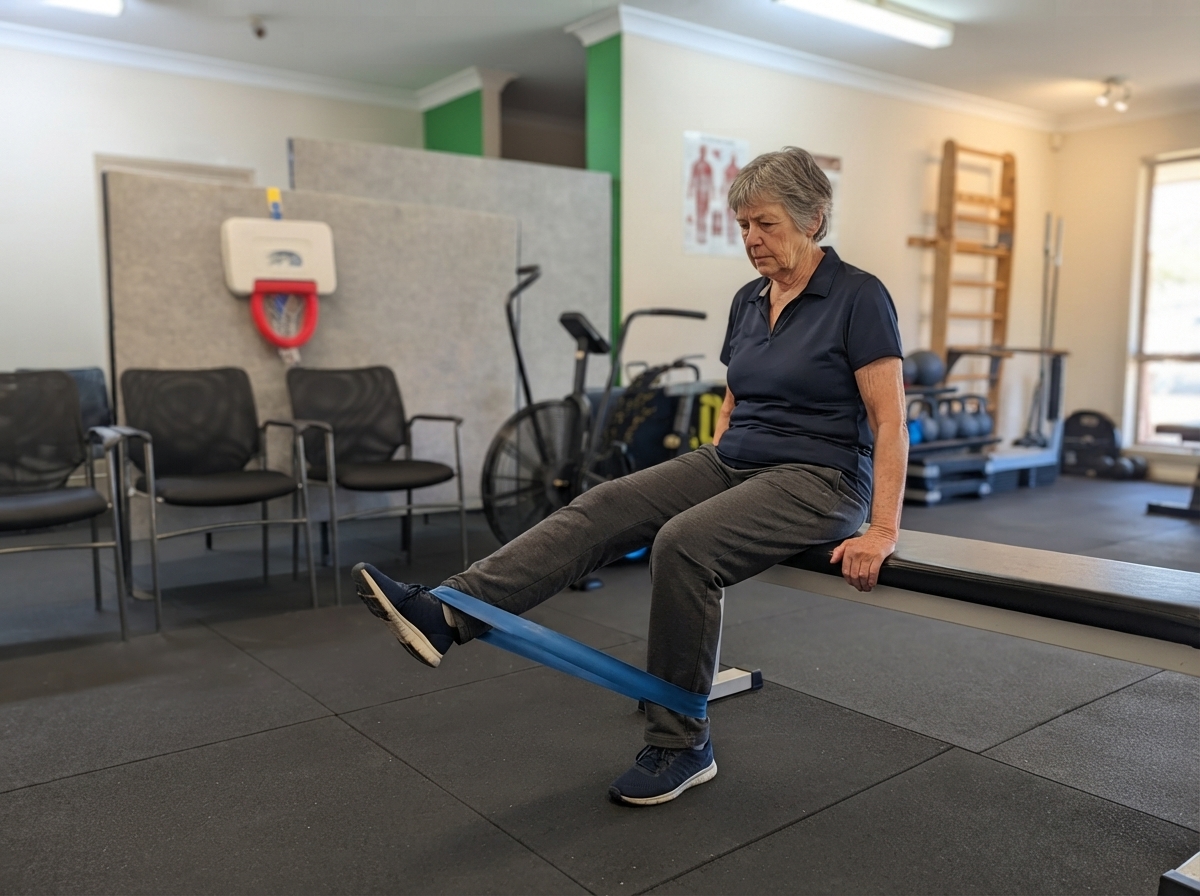
Exercise helps knee osteoarthritis by strengthening the muscles that support and protect the joint. Strong thigh and hip muscles take load off the knee, so it hurts less when you walk, climb stairs or get up from a chair. Australian guidelines recommend exercise as a first-line treatment for knee osteoarthritis.
Exercise prescription for knee osteoarthritis
The recommended exercise prescription for knee osteoarthritis is 150 minutes of moderate aerobic exercise a week plus at least two strength sessions, with the focus on progressive strengthening of the thigh and hip muscles.
150 minutes
of moderate aerobic exercise a week
2 or more
strength sessions a week
That weekly target is the same one recommended for every adult. With knee osteoarthritis, the focus is strength. Weak thigh muscles are one of the biggest drivers of knee pain, and most people with sore knees have stopped loading them.
Our focus
We start at a level your knee tolerates and increase the load each week. Some discomfort during exercise is normal and safe. As a guide, pain up to 4 out of 10 that settles within 24 hours is fine. If your knee is worse the next day, we adjust the program, not abandon it.
When should you not exercise with knee osteoarthritis?
You should ease off exercise with knee osteoarthritis when your knee is hot, red and swollen, after a new injury, or when the pain is clearly worse the next day and not settling.
- Your knee is suddenly hot, red or very swollen
- Pain is much worse the next day and isn't settling
- Your knee locks or gives way after a twist or fall
- You are unwell or have a fever
A flare-up doesn't mean stopping altogether. We change the exercises and the load until it settles.
Why see an exercise physiologist for knee osteoarthritis?
An exercise physiologist helps you load your knee enough to get stronger without setting off a flare-up. Most people with knee osteoarthritis either push through too hard or stop moving out of fear. Both make it worse.
- 01
Assess
We test your strength, walking, stairs and getting up from a chair, and see how your knee responds to load.
- 02
Set and coach
We set the right starting load and coach your technique.
- 03
Progress
We increase the load each week while keeping your pain in check.
It is not always about doing more. It is about knowing when to push and when to pull back.
Ready to get started?
Knee osteoarthritis exercise programs in Wentworthville
Our knee osteoarthritis programs run from our clinic at 92 Darcy Road, Wentworthville, and in homes across the Parramatta and Blacktown areas.
In the clinic
One-on-one sessions at 92 Darcy Road, Wentworthville.
At home
We come to you across the Parramatta and Blacktown areas.
KeepFit group classes
Exercise alongside others, supervised by an exercise physiologist.
You start with a one-on-one assessment. We re-test your strength as you go so you can see the change, and we can send progress reports to your GP or surgeon.
Is exercise physiology for knee osteoarthritis covered by Medicare?
Yes. Knee osteoarthritis counts as a chronic condition, so with a GP Chronic Condition Management Plan, Medicare pays a rebate on up to five allied health visits a year, which can include exercise physiology.
DVA and aged care
DVA cardholders and people on Support at Home may be covered. Ask us and we'll check.
Private health
Most private health funds pay a rebate for exercise physiology.
Knee osteoarthritis and exercise: common questions
Book an exercise physiologist in Wentworthville
Not sure if this is right for you? Tell us what's going on and we'll tell you honestly whether we can help.