
Exercise physiology for multiple sclerosis (MS)
Exercise is safe with MS, and done the right way it gives you more energy than it takes. We help you build strength, walking and balance around your fatigue and heat sensitivity.
What is multiple sclerosis?
Multiple sclerosis (MS) is a condition where the immune system attacks the protective coating around nerves in the brain and spinal cord. This disrupts the messages between your brain and body. MS affects everyone differently. Some people have relapses followed by recovery, while others have symptoms that slowly progress.
What are the symptoms of multiple sclerosis?
The most common symptoms of multiple sclerosis are:
- Fatigue that is out of proportion to what you've done
- Weakness, especially in the legs
- Problems with walking and balance
- Numbness or tingling
- Muscle stiffness or spasms
- Symptoms getting worse in the heat
- Bladder problems
- Changes in vision, memory or thinking
How does exercise help multiple sclerosis?
Exercise helps multiple sclerosis by building strength, improving walking and balance, and reducing fatigue over time. It also improves mood and quality of life. Exercise is safe for people with MS and doesn't cause relapses.
Exercise prescription for multiple sclerosis
The recommended exercise prescription for multiple sclerosis is 150 minutes of moderate activity a week, built up gradually, plus strength training on two to three days a week.
150 minutes
of moderate activity a week, built up gradually
2 to 3 days
of strength training a week
That weekly target is the same one recommended for every adult. With MS, the focus is getting the dose right. Too little won't help, and too much can leave you exhausted for days.
Our focus
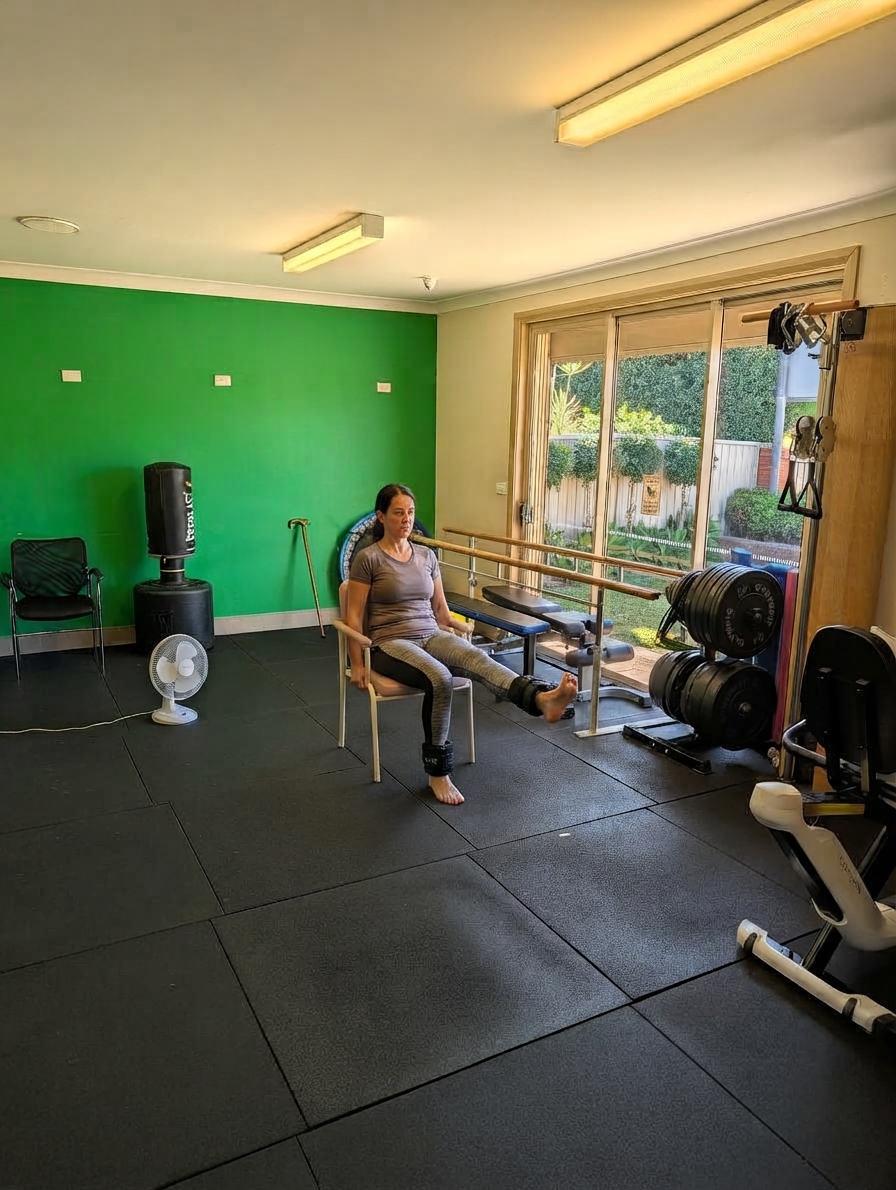
We use shorter sessions with planned rest breaks, keep you cool, and focus on leg strength, walking and balance. We plan around your energy so exercise gives you more than it takes, and adjust your program during relapses.
When should you not exercise with multiple sclerosis?
You should ease off or hold off exercise with multiple sclerosis during a relapse, when you are overheating, or when you are unwell with an infection.
- During a relapse, with new or worsening symptoms lasting more than a day (check with your neurologist)
- You are overheating, or your symptoms flare in the heat
- You are unwell or have a fever or infection
- You are severely fatigued
- You've had a recent fall, hit your head, or have new pain
Symptoms that flare with heat during exercise are usually temporary and settle as you cool down. We stop, cool you down and adjust.
Why see an exercise physiologist for multiple sclerosis?
An exercise physiologist finds the right amount of exercise for your MS. MS varies from person to person and from day to day, and getting the dose wrong is the most common reason people give up.
- 01
Assess
We test your walking, balance and strength, and talk through your fatigue, heat sensitivity and goals.
- 02
Set and coach
We set the right dose, build in rest breaks and keep you cool.
- 03
Progress
We build as you get stronger and adjust through relapses and changes.
It is not always about doing more. It is about knowing when to push and when to pull back.
Ready to get started?
MS exercise programs in Wentworthville
Our MS exercise programs run from our clinic at 92 Darcy Road, Wentworthville, and in homes across the Parramatta and Blacktown areas.
In the clinic
One-on-one sessions at 92 Darcy Road, Wentworthville.
At home
Saves your energy for the session instead of the trip.
Working with your care team
We keep your neurologist, GP and support coordinator updated.
You start with a one-on-one assessment. We re-test as you go, and can send progress reports for your NDIS plan reviews.
Is exercise physiology for MS covered by NDIS or Medicare?
Yes, depending on your situation. Exercise physiology for MS can be funded through the NDIS, DVA, private health, or a GP Chronic Condition Management Plan, which gives a Medicare rebate on up to five allied health visits a year.
NDIS
We're a registered NDIS provider and build your program around your plan goals.
Medicare, DVA and private health
Medicare, DVA and most private health funds can help cover exercise physiology. Ask us and we'll check.
Multiple sclerosis and exercise: common questions
Book an exercise physiologist in Wentworthville
Not sure if this is right for you? Tell us what's going on and we'll tell you honestly whether we can help.