Exercise physiology for osteoporosis
Bones get stronger when they are loaded the right way. We show you how to lift safely and progressively, so you protect your bones without fear of breaking them.
What is osteoporosis?
Osteoporosis is a condition where your bones lose density and strength, making them more likely to break. Breaks are most common in the wrist, hip and spine. Osteopenia is the earlier stage, where bone density is lower than normal but not yet low enough to be called osteoporosis.
What are the symptoms of osteoporosis?
Osteoporosis usually has no symptoms until a bone breaks. Signs it may be present include:
- A broken bone from a minor fall or bump
- Losing height
- A more rounded upper back
- Sudden back pain, which can be a sign of a spinal fracture
- A bone density scan showing low bone density
How does exercise help osteoporosis?
Exercise helps osteoporosis by putting healthy stress on your bones, which signals them to stay strong. It also builds the muscle strength and balance that stop you from falling, and most broken bones in people with osteoporosis happen in a fall.
Exercise prescription for osteoporosis
The recommended exercise prescription for osteoporosis is 150 minutes of moderate activity a week, plus progressive strength training on two to three days a week, alongside balance training.
150 minutes
of moderate activity a week
2 to 3 days
of progressive strength training a week
That weekly target builds on the one recommended for every adult. With osteoporosis, the focus is load. Bones only respond to loads heavier than they are used to. Walking and swimming are good for your health, but they don't load bone enough on their own.
Our focus
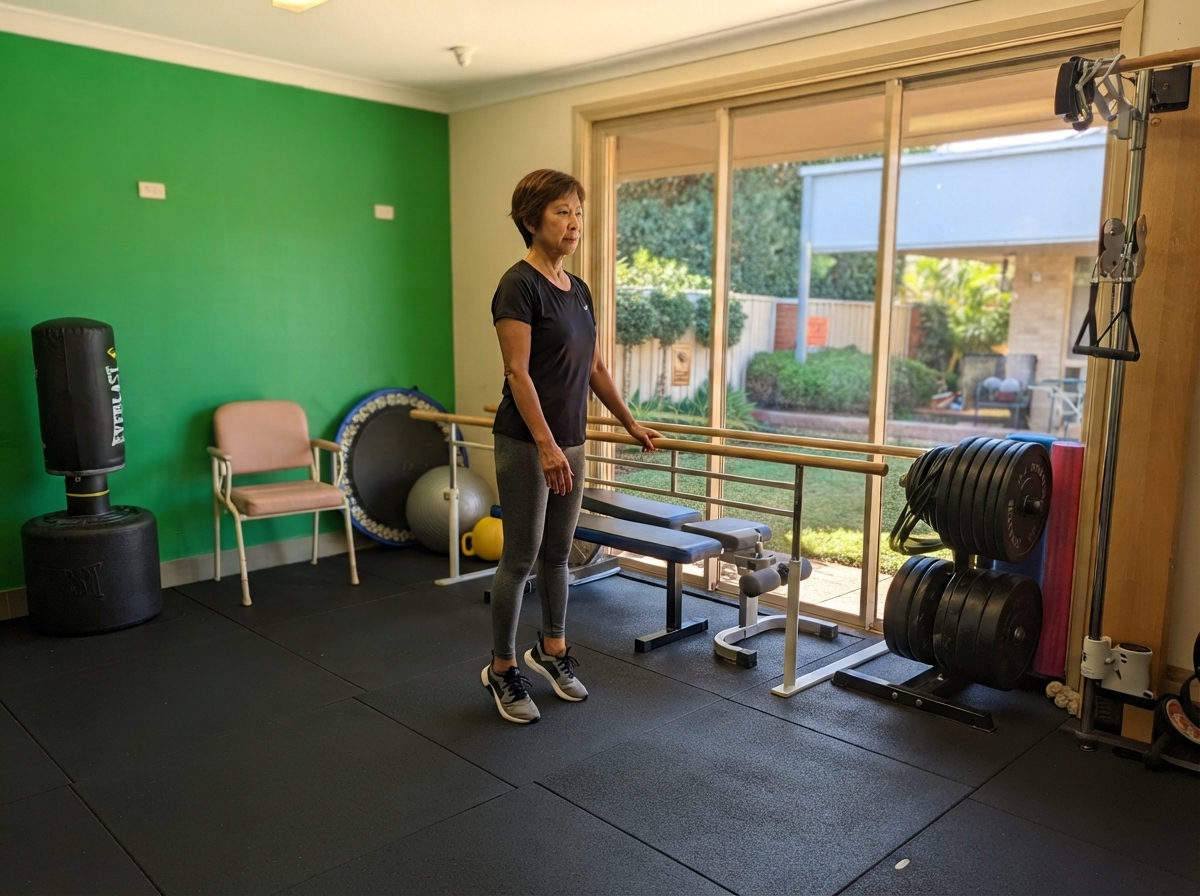
We build you up to heavier, progressive strength training, the kind shown to help bone density, plus impact exercises like heel drops if they suit you. We teach safe lifting technique that protects your spine, and we avoid heavy bending forward and twisting under load.
When should you not exercise with osteoporosis?
You should hold off exercise with osteoporosis if you have sudden severe back pain, a new bone pain after a fall, or a recent fracture that hasn't been cleared.
- Sudden, severe back pain, especially after lifting or bending
- New bone pain after a fall or bump
- A recent fracture that your doctor hasn't cleared for exercise
- Feeling dizzy, light-headed or unwell
Pulling back doesn't mean stopping. We change the exercises and the load until you are cleared to progress again.
Why see an exercise physiologist for osteoporosis?
An exercise physiologist makes heavier strength training safe when your bones are fragile. Heavier loading is what builds bone, and it is also what people with osteoporosis are most afraid of.
- 01
Assess
We look at your bone density results, any fractures, and your strength, balance and posture.
- 02
Set and coach
We set the right starting load and teach technique that protects your spine.
- 03
Progress
We increase the load over time, so your bones keep getting the signal to stay strong.
It is not always about doing more. It is about knowing when to push and when to pull back.
Ready to get started?
Osteoporosis exercise programs in Wentworthville
Our osteoporosis programs run from our clinic at 92 Darcy Road, Wentworthville, and in homes across the Parramatta and Blacktown areas.
In the clinic
One-on-one sessions with full strength equipment at 92 Darcy Road, Wentworthville.
At home
We come to you across the Parramatta and Blacktown areas.
KeepFit group classes
Strength and balance exercise alongside others, supervised by an exercise physiologist.
You start with a one-on-one assessment. We re-test your strength as you go, and can send progress reports to your GP.
Is exercise physiology for osteoporosis covered by Medicare?
Yes. Osteoporosis counts as a chronic condition, so with a GP Chronic Condition Management Plan, Medicare pays a rebate on up to five allied health visits a year, which can include exercise physiology.
DVA and aged care
DVA cardholders and people on Support at Home may be covered. Ask us and we'll check.
Private health
Most private health funds pay a rebate for exercise physiology.
Osteoporosis and exercise: common questions
Book an exercise physiologist in Wentworthville
Not sure if this is right for you? Tell us what's going on and we'll tell you honestly whether we can help.