Exercise physiology for people with a stoma
Having a stoma shouldn't stop you lifting, walking or doing what you love. Stoma exercise is one of our clinic's specialties, and we guide you from your first gentle core exercises back to full activity.
What is a stoma?
A stoma is an opening on the abdomen that allows waste to leave the body into a bag. A colostomy or ileostomy diverts the bowel, and a urostomy diverts urine. People have stoma surgery for reasons including bowel cancer, Crohn's disease, ulcerative colitis, diverticulitis and injury. A stoma can be temporary or permanent.
What challenges do people face after stoma surgery?
The most common challenges after stoma surgery are:
- Fear of lifting or exercising
- A weak core after abdominal surgery
- Worry about leaks or a hernia around the stoma
- Tiredness and loss of fitness
- Back pain
- Less confidence in your body
- Dehydration, especially with an ileostomy
How does exercise help after stoma surgery?
Exercise helps after stoma surgery by rebuilding the core and overall strength that surgery takes away, so you can get back to lifting, walking, work and hobbies with confidence. Gradual core strengthening may also help lower the risk of a parastomal hernia, a bulge that can form around the stoma.
Exercise prescription after stoma surgery
The recommended exercise prescription after stoma surgery is a graded program that starts with gentle core exercises in the first weeks, builds to 150 minutes of moderate activity a week, and adds progressive strength training on two or more days.
150 minutes
of moderate activity a week, built up gradually
2 or more
strength sessions a week, including the core
That weekly target is the same one recommended for every adult. With a stoma, the focus is your core. Abdominal surgery weakens the muscles around the stoma, and most people are told to avoid lifting without being shown how to rebuild.
Our focus
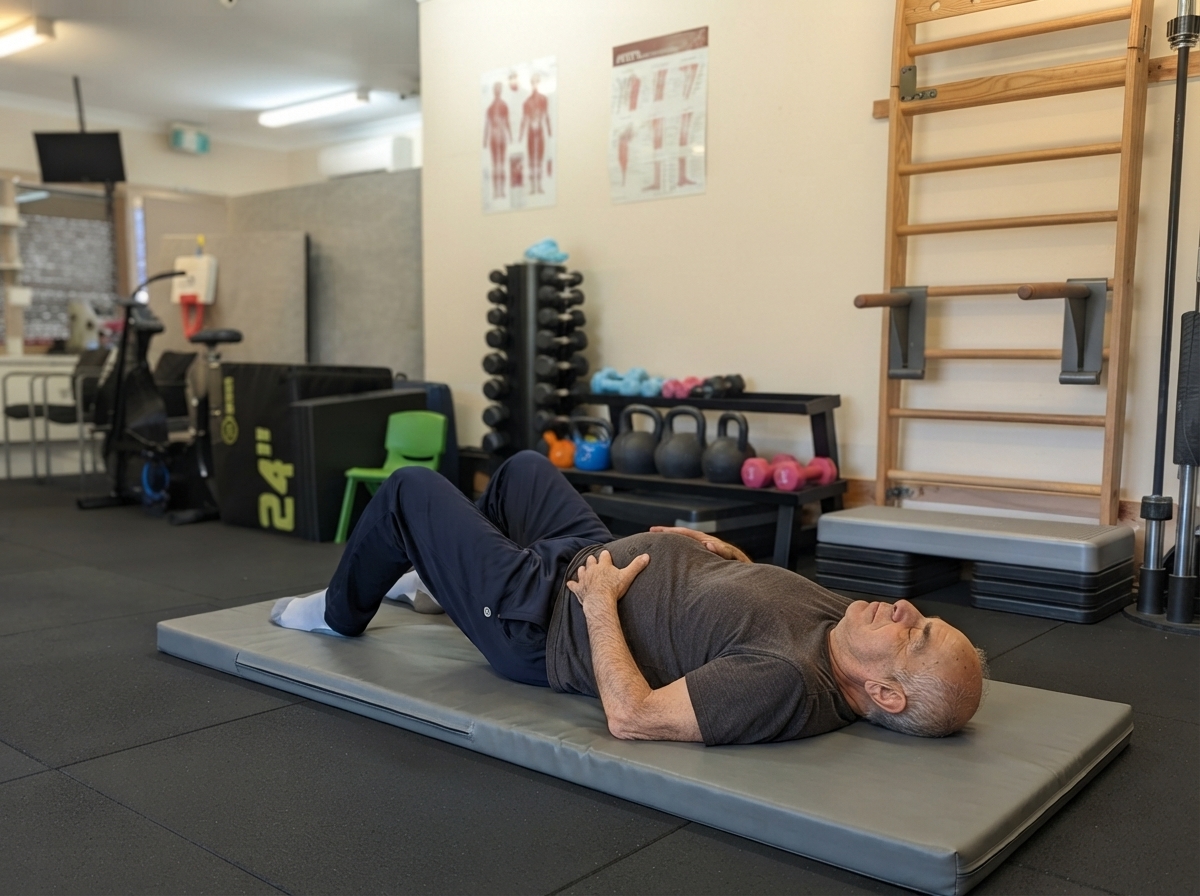
We start with breathing and gentle deep core exercises, then progress to functional strength and lifting. We teach you to breathe out on effort rather than hold your breath, follow your surgeon's and stoma nurse's timeframes, and adapt around your bag, any support garment, and your hydration if you have an ileostomy.
When should you not exercise with a stoma?
You should not exercise with a stoma before your surgeon has cleared you, or if you notice a new bulge, changes in the colour of your stoma, or signs of dehydration or blockage.
- Before your surgeon has cleared you after an operation
- A new bulge, swelling or pain around your stoma (see your stoma nurse)
- Your stoma turns dark red, purple or black (seek medical help urgently)
- Signs of dehydration, like dizziness, strong thirst or dark urine
- Severe stomach pain, vomiting or no output from your stoma (seek medical help urgently)
- A fever, or redness around your wound
We work alongside your stoma nurse and adjust your program whenever anything changes.
Why see an exercise physiologist after stoma surgery?
An exercise physiologist gives you a clear, step-by-step plan back to full activity. Most people with a stoma are given restrictions but no plan, and fear of a hernia leads them to avoid activity, which leaves the core weaker.
- 01
Assess
We look at your surgery and timeframes, your core strength and fitness, and what you want to get back to.
- 02
Set and coach
We start gently and coach your breathing and technique.
- 03
Progress
We build from core exercises to confident lifting and full activity, and re-test as you go.
It is not always about doing more. It is about knowing when to push and when to pull back.
Ready to get started?
Stoma exercise programs in Wentworthville
Our stoma exercise programs run from our clinic at 92 Darcy Road, Wentworthville, and in homes across the Parramatta and Blacktown areas.
In the clinic
One-on-one sessions at 92 Darcy Road, Wentworthville.
At home
Useful in the early weeks after surgery, when getting out is harder.
Before surgery
Building strength before your operation can help your recovery afterwards.
You start with a one-on-one assessment. We re-test as you go, and can send progress reports to your GP, surgeon or stoma nurse.
Is exercise physiology for people with a stoma covered by Medicare?
Often, yes. A GP Chronic Condition Management Plan gives a Medicare rebate on up to five allied health visits a year, which can include exercise physiology.
Private health and DVA
Most private health funds pay a rebate, and DVA cardholders may be covered. Ask us and we'll check.
Support at Home
If you have aged care funding, exercise physiology can be part of your plan. We work with your provider.
Stoma and exercise: common questions
Book an exercise physiologist in Wentworthville
Not sure if this is right for you? Tell us what's going on and we'll tell you honestly whether we can help.